



Your trees in Fredericton face a specific set of pressures. Silver and sugar maples on older lots, red and white oaks along the streets, birch and Norway spruce in tighter backyards, and ash that the emerald ash borer has already weakened across the region. Add wet riverside soil, road salt from winter maintenance, and compacted ground in post-war subdivisions, and you get the conditions where leaf diseases, cankers, and root decay take hold. Tree disease treatment in Fredericton starts with an accurate diagnosis, not a guess. Our ISA Certified Arborists identify the pathogen or stress factor, then build a treatment plan that fits the species, the site, and the season. We have worked these neighbourhoods since 2016, and we know what a failing maple on a ravine lot looks like before the canopy thins. If you are comparing options, start with our arborist report service to get the diagnosis in writing.
Why tree disease treatment matters in the Fredericton area
Most tree problems here do not appear overnight. A maple with verticillium wilt or a birch with bronze birch borer shows subtle signs first: dieback in the upper crown, smaller leaves, early colour change. By the time a homeowner notices, the tree may already be a removal candidate. Early treatment preserves the canopy, the property value, and the shade that mature street trees provide.
- Emerald ash borer has killed ash across in Fredericton and the surrounding area, and injection is the only reliable protection for a tree you want to keep.
- Leaf diseases such as tar spot and anthracnose weaken maples and oaks over repeated seasons.
- Cankers and decay enter through pruning wounds and storm damage, spreading into the trunk.
- Road salt and compacted soil stress trees in Downtown and along busy corridors, opening the door to secondary pests.
- Wet riverside soil favours root rot on low-lying properties near the Nashwaak and Saint John rivers.
Treating these issues early costs a fraction of removing and replacing a mature tree. The City of Fredericton may require a permit for a private tree removal, so keeping a healthy tree standing also avoids paperwork and delays.
Key fact: A single emerald ash borer injection for a mature ash typically runs from $250 to $450, depending on trunk diameter, and protects the tree for two to three years. Removing that same ash later often costs $1,200 to $2,500 once it is dead and brittle.
How our arborists diagnose and treat a sick tree
We start with a visual assessment from the ground and, where needed, a closer look at the crown, trunk, and root flare. Soil conditions, drainage, and the tree's history on the site all factor in. Our ISA Certified Arborists then recommend the least invasive option that solves the problem, whether that is a targeted treatment, structural pruning, or, in some cases, removal to protect neighbouring trees.
- We inspect the canopy, trunk, and root zone for signs of disease, pests, and mechanical damage.
- We identify the species and confirm the pathogen or stress factor before recommending any product.
- We apply treatments such as emerald ash borer injection from late spring to early summer, when the tree can take up the product effectively.
- We remove deadwood and infected limbs to stop the spread and reduce wind risk.
- We document the diagnosis and the work for your records, and we can prepare an arborist report if a permit application is needed.
Every recommendation comes with a clear explanation of what we expect it to achieve and what it will cost. You can see how we price diagnostic visits and follow-up treatments on our pricing page.
Key fact: On a mature sugar maple in Hanwell showing crown dieback, we often find a combination of root compaction and old pruning wounds. A soil remediation plan plus deadwood removal usually runs $600 to $1,100, compared with $2,000 or more to remove and replant the same tree.
Treatment methods we use
The right method depends on the disease, the species, and the site. We do not apply a standard package to every tree. The table below outlines the main approaches and when each one fits.
| Method | Description | Context |
|---|---|---|
| Trunk injection | Direct delivery of a targeted product into the vascular system | Emerald ash borer protection, late spring to early summer |
| Foliar treatment | Application to the leaves during active growth | Leaf spot and fungal diseases on maples and oaks |
| Soil remediation | Aeration, organic matter, and mulching to improve root health | Compacted urban soil and construction damage |
| Structural pruning | Removal of dead, diseased, and crossing limbs | Canker management and wind-risk reduction |
| Cabling and bracing | Support for weak unions and split leaders | Mature trees with structural defects |
We combine these methods when a tree shows more than one problem, which is common in older neighbourhoods where soil and drainage have changed over decades.
What regulates tree work in Fredericton
Before any removal, we check whether the City of Fredericton requires a permit for the tree in question. The application is normally supported by an arborist report, and we prepare that document when it is needed. Rules and thresholds differ from one municipality to the next across the Fredericton area, so a tree in Hanwell may fall under a different process than one in the city. Near private electrical service entrances, we respect the required approach distances. We never touch the public distribution network of NB Power; if a tree is contacting those lines, the work is referred to NB Power. Brush and wood from treatments are chipped or removed from the site, and we leave the property clean.
When to book a diagnosis in Downtown and across the city
Timing matters for treatment success. Trimming and structural pruning are best done in dormancy, from late fall to late winter, when the tree's energy is in the roots and wounds close cleanly in spring. Emerald ash borer injection runs from late spring to early summer, when the tree is actively moving water and the product distributes through the canopy. Cedar hedge trimming is a late spring and summer task, separate from disease work but often scheduled on the same visit. Emergency removals happen year-round, peaking with ice storms and summer windstorms.
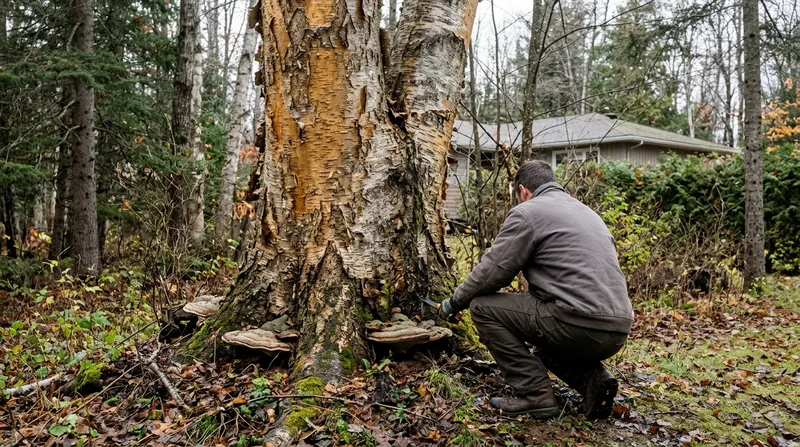
If you see dieback, mushrooms at the base, or a thinning crown, book a diagnosis before the next growth season. Our crews work across Fredericton and the surrounding municipalities, and we can usually schedule an assessment within a few days. Call (506) 300-2975 or visit our contact page to arrange a free estimate.
For trees that need more than treatment, we also handle tree removal and stump grinding once the diagnosis is confirmed. Keeping a written record of the assessment helps if you later apply for a permit or need to document the tree's condition for your insurer.
Prices Tree Disease Treatment in Fredericton — Indicative pricing
| Service | Price | Details |
|---|---|---|
| Diagnostic visit and written assessment | From $150 | Visual inspection, species identification and treatment plan |
| Emerald ash borer injection | From $250 | Per tree, based on trunk diameter, late spring to early summer |
| Foliar disease treatment | From $200 | Application during active growth includes follow-up check |
| Soil remediation and aeration | From $400 | Compacted or damaged root areas, including mulch |
| Arborist report for permit application | From $350 | Written report supporting a City of Fredericton permit |
| Travel | Included | In Fredericton and the surrounding area |
| Free estimate | Free | Response within 24 hours at (506) 300-2975 |
Indicative prices; free, personalized estimate within 24h at (506) 300-2975.