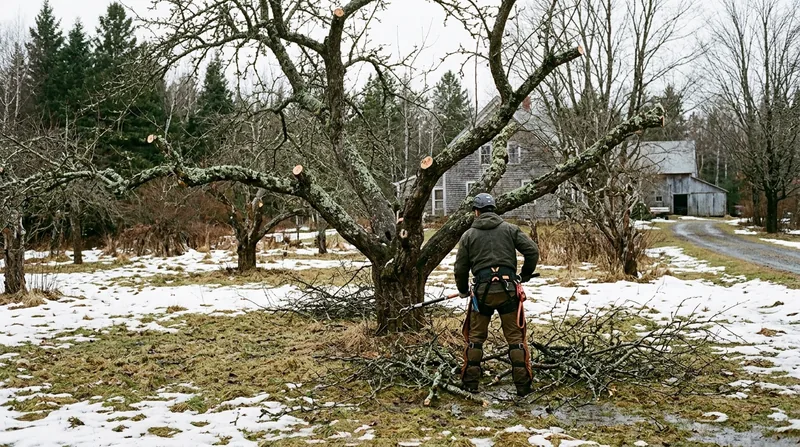




Fruit tree pruning in Fredericton is a late-winter job, and the timing matters more than the tools. Apple, pear, plum and cherry trees set their fruit buds on wood that grew the previous season, so every cut you make in dormancy decides how much light reaches the canopy in July. In the Fredericton area, the freeze-thaw cycle of late February and March leaves a short window when the wood is still dormant but the sap is not yet running. Our ISA Certified Arborists work that window hard, from the older lots along the Nashwaak to the backyards of Hanwell, opening canopies that have gone dense for a decade. If your plums are showing black knot or your apples are small and crowded, the fix starts with a proper structural prune, not a hedge trimmer.
We have been pruning fruit trees here since 2016, and we know what in Fredericton and the surrounding area clay and a short growing season do to a tree's shape. A structural pruning program keeps a mature tree productive and safe, and it is the same skill set we apply to ornamentals and shade trees across the region.
Why fruit trees need a proper prune, not a tidy-up
Most backyard fruit trees in Fredericton are planted too close to a fence or a cedar hedge, and they have never been thinned. The result is a dense crown where light cannot penetrate, fruit stays small, and fungal problems take hold in the still air. Pruning opens the centre of the tree, removes crossing limbs and lets you see the structure before the leaves hide it. It also lets us spot black knot on plums and cherries while the knots are still small and easy to cut out.
- We remove dead, diseased and crossing branches before they rub bark and open a wound.
- We thin the interior so sunlight reaches the lower fruiting wood, which improves colour and sugar.
- We shape the tree for long-term structure, not just this year's crop.
- We cut out black knot with a clean margin and dispose of the infected wood off-site.
A tree that is pruned correctly every second or third winter needs far less corrective work later, and it lives longer in a residential yard.
Key fact: A mature apple tree in a Fredericton backyard typically takes 2 to 3 hours to prune properly, and a small plum or cherry takes 45 minutes to an hour. Most residential jobs fall between $275 and $650, depending on tree count and access.
For the official context on tree work and permits in in Fredericton and the surrounding area, the provincial government publishes guidance through gnb.ca, and it is worth a read before any removal is planned.
How we prune a fruit tree in the Fredericton area
Every job starts with a walk-around. We look at the graft union, the root flare and the direction the prevailing winter wind hits the tree. From there we set a plan: which limbs stay, which come out, and how much we can safely take off in one season. We climb or use ladders depending on the tree, and we keep our cuts within the collar so the tree can seal the wound on its own.
- We assess the tree's structure and note deadwood, black knot and any hazard limbs.
- We make the large structural cuts first, then the smaller thinning cuts.
- We sterilize tools between trees to avoid spreading disease.
- We chip the brush on-site and leave the chips or haul them away, your choice.
- We walk the job with you at the end and explain what to expect next season.
The whole visit is documented, and if the tree is on a property line or near a structure, we note that in the report.
Key fact: A recent job in Hanwell involved four old apple trees that had not been pruned in 12 years. We removed 40 per cent of the crown in one visit, chipped the brush into a trailer and left the property clean in under five hours. The homeowner booked the next prune for the following March.
If you are also dealing with overgrown hedges on the same property, our cedar hedge trimming service can be scheduled in the same visit.
Pruning methods we use, and when each one fits
Not every fruit tree gets the same treatment. A young tree needs training cuts to build a strong scaffold, while an old tree needs renewal cuts to bring it back into production. The method depends on species, age and how much the tree has been neglected. The table below shows the main approaches we use across the region.
| Method | Description | Context |
|---|---|---|
| Structural pruning | Selecting permanent scaffold limbs and removing competing leaders. | Young to mid-age trees that need shape for the long term. |
| Renewal pruning | Cutting back older wood to stimulate new fruiting shoots. | Neglected trees that still have a sound trunk and roots. |
| Thinning | Removing interior branches to improve light and airflow. | Dense canopies prone to fungal pressure in humid summers. |
| Disease removal | Cutting out black knot and cankers with a clean margin. | Plums and cherries showing dark, swollen growth on twigs. |
Each method has a season and a limit, and we choose the one that fits the tree in front of us rather than forcing a single approach on every job.
What governs the work on your property
Fruit tree pruning on a private residential lot rarely needs a municipal approval, but the City of Fredericton may require a permit for a private tree removal, and the application is normally supported by an arborist report. Rules and thresholds differ from one municipality to the next across the Fredericton area, so we check before any removal is scheduled. We respect approach distances near your private electrical service entrance, and we never touch the public distribution network of NB Power: a tree touching the public lines is referred to NB Power. Brush and wood are chipped or hauled away the same day, and we leave the yard clean.
For a formal assessment to support a permit application or a property sale, our arborist report service provides the documentation the city asks for.
Timing the prune across the seasons
Late winter is the best window for apple, pear, plum and cherry. The tree is dormant, the structure is visible, and the wounds begin sealing as soon as growth starts in spring. Pruning in late fall works too, but a hard early freeze can leave fresh cuts exposed. We avoid pruning in spring once the buds break, because the tree loses energy it needs for the crop. Summer pruning is limited to light corrective work and water sprouts.
- Late February to late March is the prime window for most fruit trees in the region.
- Plums and cherries are pruned slightly later to reduce the risk of infection.
- Light summer thinning can be done after harvest if a limb is in the way.
- Emergency storm work on a split fruit tree is handled year-round.
Book early, because the dormancy window fills quickly once the weather breaks.
Key fact: In a typical year we prune between 120 and 160 fruit trees in the Fredericton area, and the March calendar is usually full by mid-February. A single tree visit starts at $275, and a full orchard block of six trees starts at $1,275.
For a full breakdown of what each job costs, see our pricing page, and to book a visit call (506) 300-2975.
Prices Fruit Tree Pruning in Fredericton — Indicative pricing
| Service | Price | Details |
|---|---|---|
| Single fruit tree prune | From $275 | Structural prune of one mature apple, pear, plum or cherry tree. |
| Small orchard block (3 to 6 trees) | From $1,275 | Full structural and renewal prune across a small planting. |
| Black knot removal | From $350 | Cutting out infected wood on plums and cherries, with off-site disposal. |
| Large or difficult-to-access tree | On assessment | Climbing or rigging required, priced after a free on-site look. |
| Travel | Included | In Fredericton and the surrounding area. |
| Estimate | Free | Reply within 24 hours at (506) 300-2975. |
Indicative prices; free, personalized estimate within 24h at (506) 300-2975.